

Introduction
In modern agriculture and industrial production, the choice of storage facilities directly impacts storage efficiency and safety. Particularly when storing grain, feed, or chemical raw materials, people often find themselves torn between steel silos and concrete silos. So, what exactly are the differences between these two storage methods? How can one make an informed choice based on specific needs? This article will systematically analyze the characteristics of both options in terms of materials, construction time, service life, maintenance requirements, and suitable applications.
An Introduction to Two Storage Methods
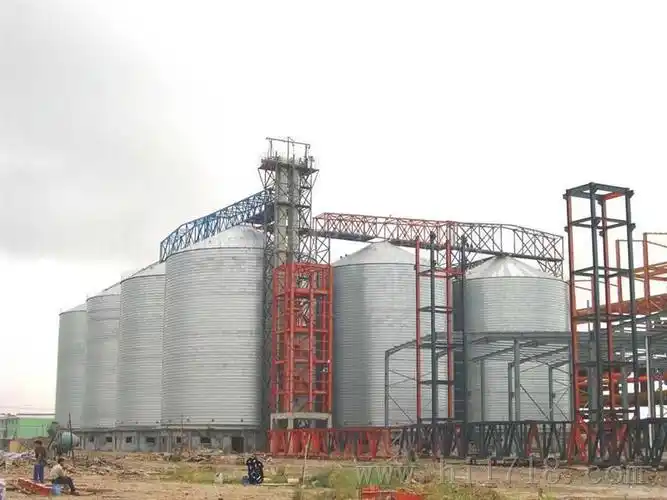
A steel silo is a storage structure primarily constructed from galvanized steel plates. It typically features a modular design, consisting of several steel plate rings assembled and bolted together to form a complete silo body.
Key Features:
- Short construction cycle: Steel silos can be prefabricated in a factory and then transported to the site for assembly, typically allowing construction to be completed within a few weeks.
- High flexibility: Modules can be added or removed as needed to adjust storage capacity, making it easy to accommodate temporary or changing storage requirements.
- Relatively low cost: Compared to concrete silos, steel plate silos offer greater cost-effectiveness in terms of materials and construction.
- Maintenance requires attention to corrosion prevention: Steel plate silos are susceptible to humidity and environmental factors, requiring regular anti-corrosion treatment and inspections.
Introduction to Concrete Silos
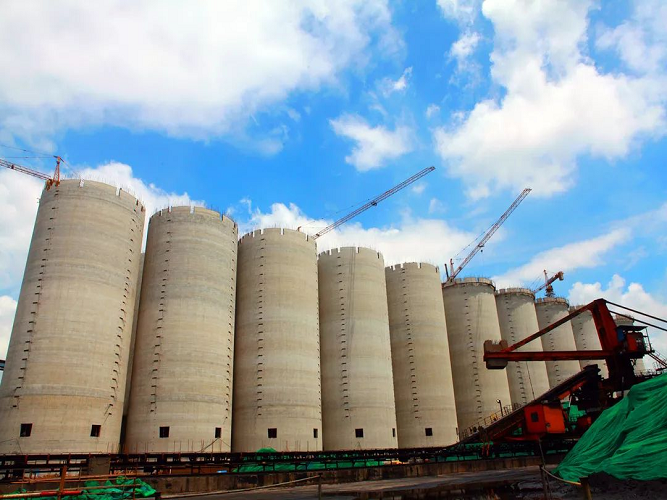
Concrete silos are fixed storage facilities constructed primarily from reinforced concrete. They are typically large in size and structurally robust.
Key Features:
- Structurally robust and durable: Reinforced concrete offers high strength, excellent corrosion resistance, and good fire resistance, enabling the safe long-term storage of various materials.
- Long service life: With proper maintenance, concrete silos can have a service life of over 50 years, making them suitable for long-term storage needs.
- Simple Maintenance: Compared to steel silos, concrete silos require almost no routine maintenance and offer superior structural stability.
- Longer Construction Period and Higher Costs: The process from construction to full curing typically takes several months, and construction costs and labor requirements are higher than those for steel silos.
Comparison of Steel Silos and Concrete Silos
To better understand the differences between the two, they can be compared across the following key dimensions:
|
Comparison Item |
Steel Silo |
Concrete Silo |
|
Construction Time |
Fast, usually a few weeks |
Slow, usually several months |
|
Construction Cost |
Relatively low |
Relatively high |
|
Service Life |
15–30 years (depending on maintenance) |
Over 50 years |
|
Maintenance |
Requires regular rust prevention and inspection |
Low, structure is stable |
|
Capacity Flexibility |
Can be expanded modularly |
Difficult to modify once built |
|
Suitable Environment |
Mild climates, short- or mid-term storage |
All climates, long-term storage |
Practical Application Scenarios
Steel Silo Application Example:
A livestock farm needed to add 5,000 tons of feed storage space within two months. While a concrete silo would have required an excessively long construction period, a steel silo could be installed quickly to meet this short-term need.
Concrete Silo Application Example:
A port grain warehouse requires long-term storage of large quantities of grain while ensuring safety and durability. Concrete silos can withstand the pressures of long-term storage and remain safer and more reliable even under extreme weather conditions.
In practical applications, you should select the appropriate warehouse type based on specific requirements to enhance investment efficiency and storage management standards.
Conclusion
Overall, both steel silos and concrete silos have their own advantages. When making a choice, one should consider storage requirements, construction timeline, budget, and service life comprehensively.
Steel Silos
Fast construction, low cost, flexible capacity → Suitable for short-term, small-to-medium-sized projects, or scenarios requiring rapid expansion.
Concrete Silos
Sturdy structure, long service life, high safety → Suitable for long-term, large-scale fixed storage projects.
In warehouse management, selecting the appropriate type not only ensures material safety but also enhances economic efficiency. For users, clearly defining requirements and weighing the pros and cons are key to making the best decision.
Interested in customizing a steel silo for your project?
Contact us today to share your requirements, and our engineers will provide you with a customized project solution.
Please send an email to: yinghe406@gmail.com