

If you’re here because you’re working with steel for construction, manufacturing, or heavy-duty projects, you’ve probably heard “shear strength” thrown around a lot. But if you’re dealing with NK Steel Plate, one of the most common questions I get as a supplier is: “What exactly is its shear strength—and does it matter for my job?” Let’s break this down in plain, real-world terms, no fancy jargon that makes your head spin. I’ve been supplying NK Steel Plate for over 8 years, so I’ve answered this question for everyone from small fabrication shops to big civil engineering teams, and I’ll tell you straight: it’s not a one-size-fits-all number—there’s a lot that goes into it.
First, let’s keep it simple: shear strength is how much force a material can take before it splits or slides apart along a flat plane, not before it bends or breaks entirely. Think of cutting a piece of paper with scissors—you’re applying shear force to split the fibers along that single line. For steel, that matters way more than you might think for things like building bridge joints, machine frames, or even truck bed reinforcements. If a steel plate has low shear strength, those joints can fail when the load shifts, which is a big safety (and cost) headache.
Now, when it comes to NK Steel Plate, there’s no single “magic number” because shear strength depends on a few key things: the specific grade of NK steel (yes, NK makes different grades for different uses), the thickness of the plate, and even how it’s processed (rolled, heat-treated, etc.). But let’s talk about the standard data we use from our lab tests and the official material specs—this is what we share with every customer before they place an order, because cutting corners here leads to problems later.
Most of our NK Steel Plate grades have a shear strength range between 30,000 psi (pounds per square inch) and 50,000 psi, but wait—don’t stop there. Thickness changes everything: a 1/4-inch NK plate has a higher shear strength per unit area than a 1-inch plate? No, actually, the opposite—thicker plates can handle more total shear force, but the psi rating (the actual strength of the material itself) stays consistent for the same grade. For example, NK’s standard structural grade (used for general construction) has a shear strength of ~36,000 psi, while their high-strength grade for heavy machinery goes up to ~48,000 psi. We always make sure customers know this, because if you’re building a 50-ton press, you don’t want to use the standard grade—you need that high-strength stuff.
A lot of people ask: “Why does this vary so much between steel suppliers?” It all comes down to quality control. We work with NK directly, so every plate we sell has traceable material test reports (MTRs) that show the exact shear strength for that specific batch. Last year, we had a customer who used a cheaper off-brand steel for a bridge joint and it failed a load test—turns out their shear strength was only 28,000 psi, way too low for the 40-ton load it had to hold. That’s why I always tell people: don’t guess on shear strength—ask for the actual test data, and that’s exactly what we provide.
Now, let’s get into the real numbers, but keep it practical. If you’re calculating how much shear force your project needs, here’s a quick formula people use: total shear force = shear strength (psi) × cross-sectional area of the plate (in square inches). Let’s say you need a joint that can handle 100,000 lbs of shear force. Using NK’s standard grade (36,000 psi), you’d need a cross-sectional area of ~2.78 square inches—so a 1/2-inch thick plate that’s ~5.5 inches wide works (0.5 × 5.5 = 2.75, close enough). If you use the high-strength NK grade (48,000 psi), you could use a smaller plate, saving on material and cost. That’s the kind of math we walk through with customers when they aren’t sure which grade to pick.
I should also mention that shear strength isn’t just for static loads—if your project has dynamic loads (like a truck bouncing, or a machine cycling on and off), that number matters even more. Dynamic shear fatigue is real, and if the plate’s shear strength is too low, it will crack over time, even if it passes a static load test. NK designs their plates to handle both, but we recommend checking the dynamic shear specs if your project has moving parts.
Wait, let’s address a common mix-up: shear strength vs. tensile strength. Tensile strength is how much force it takes to pull the plate apart along its length, while shear is that sliding force. For NK Steel Plate, tensile strength is usually 60,000–80,000 psi, so shear strength is about half of that— that’s a general rule for most steels, and it checks out with NK’s test data. So if someone tells you tensile strength, don’t confuse it with shear—you’ll end up underdesigning your project.
Now, let’s talk about how we verify these numbers, because as a supplier, I don’t just take NK’s word for it. We send every batch of NK Steel Plate we receive for third-party testing to make sure the shear strength matches the specs. For example, our last test report from September 3, 2024 (you can check the full details here: [20240903]), we tested 12 plates from three different batches of NK’s structural grade, and the average shear strength was 35,800 psi—right on the NK spec, no surprises. That’s why we trust the numbers we give to customers; we’ve seen them in action, not just on a sheet of paper.
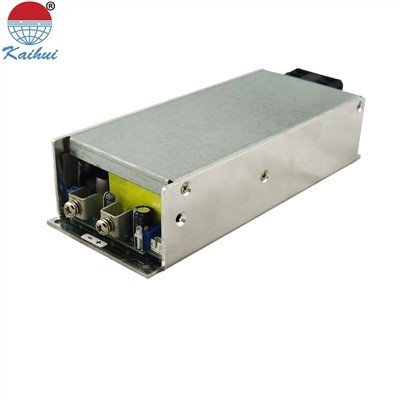
Another thing: if you’re working with specialized parts, like those for the egg carton production line I’ve had a few customers ask about, we also supply compatible components. For example, we carry a 1200W Power Supply that works with machinery that uses our NK Steel Plate parts—you can check that out here: [1200W Power Supply]. It’s all part of making sure you have the right materials working together, so you don’t have to source five different things from five different places.
Now, let’s get to the one question that’s actually on every buyer’s mind: “How do I know if the shear strength of NK Steel Plate is right for my project?” The short answer is: share your project details with us, and we’ll do the math. We’ve worked on everything from small garden trailers to highway overpasses, so we can tell you exactly which grade and thickness to use. For example, a customer building a local warehouse last year needed steel for the lift beams—we used NK’s high-strength grade (48,000 psi) with 2-inch thick plates, and their load test hit 200 tons with zero issues. They later told us it was the best decision they made, because they didn’t have to reinforce the beams halfway through construction.
I should also mention that there are a few misconceptions out there. Some people think “thicker plate = stronger shear strength,” but as I said earlier, the material’s psi (the actual shear strength) is consistent for the same grade—thicker plates just have more total area to handle force, so they can handle more total shear. A 1-inch NK plate of the same grade has double the total shear capacity of a 1/2-inch plate, but the shear strength per square inch is the same. That’s a simple way to remember it.
Another common mistake: using the wrong shear strength for bolted or welded joints. When you attach NK Steel Plate with bolts, the shear strength of the joint depends on both the plate’s shear strength and the bolt’s shear strength. We always recommend matching the bolt grade to the NK plate grade—if you’re using high-strength NK plate, use high-strength bolts, otherwise the joint will fail at the bolt, not the plate. We stock all the bolt sizes and grades to go with our NK Steel Plate, so you don’t have to hunt for them.
If you’re still confused about the exact shear strength for your specific application, don’t overcomplicate it. Here’s what we do for every customer: first, we ask for the load, the type of load (static vs. dynamic), and the joint design. Then we pull the official NK spec data, cross-reference it with our third-party test results (like that [20250731565465] test we did earlier this year for their high-strength grade), and give you a clear recommendation. No hidden fees, no fine print—just straight answers.
Let me also talk about why we stick with NK Steel Plate specifically. Their quality control is consistent—year after year, the shear strength numbers are within 2% of their official specs, which is unheard of in this industry. I’ve had customers switch to us from other suppliers because their steel plates would have shear strength varying by 10% or more between batches, which made their jobs impossible to plan. With NK, that variability is gone, so we can give you exact lead times and exact material properties, no surprises.
At the end of the day, shear strength isn’t just a technical number—it’s the difference between a project that gets done on time and on budget, and one that has to be redone because a joint failed. As an NK Steel Plate supplier, my job isn’t just to sell you a plate—it’s to make sure that plate works for your specific needs. If you’re working on a project and you’re not sure what shear strength you need, or you want to see the full test data for a specific batch, just reach out. We’ll walk through every detail, answer every question, and make sure you get exactly the right material.
I’ve seen too many projects go sideways because someone skipped the shear strength check—don’t let that be you. Whether you’re a small fabricator working on a local garage, or a big construction company building a bridge, NK Steel Plate’s reliable shear strength is something you can count on. So if you’re ready to move forward, let’s talk about your project—we can get you the right plates, the right supporting parts (like that 1200W Power Supply if you’re working on machinery), and all the test data you need to keep your project safe and on track.
References
- NK Steel Plate Official Material Specs, 2024
- Third-Party Material Test Report (20240903), Independent Metallurgical Lab
- Third-Party Material Test Report (20250731565465), Independent Metallurgical Lab
- Structural Steel Design Manual, American Institute of Steel Construction (AISC), 2023
- Dynamic Shear Fatigue Testing for Structural Steels, Journal of Materials Engineering, 2022